Ratha Yatra, also known as the Festival of Chariots, is one of the most revered and grand festivals celebrated in India. Dedicated to Lord Jagannath, an incarnation of Lord Vishnu, the festival holds immense spiritual and cultural significance. Celebrated primarily in Puri, Odisha, Ratha Yatra attracts millions of devotees and tourists from across the world, turning the coastal town into a vibrant hub of devotion, festivity, and tradition.
Historical and Religious Significance

The term Ratha Yatra translates to “Chariot Journey.” The festival is deeply rooted in Vaishnavism and celebrates the annual journey of Lord Jagannath, along with his siblings—Lord Balabhadra and Devi Subhadra—from the Jagannath Temple to the Gundicha Temple, which is believed to be the home of their aunt. This journey is symbolic of Lord Jagannath’s desire to give darshan (holy sight) to all, irrespective of caste, creed, or religion.
According to Hindu mythology, this tradition has been followed for centuries, and it is believed that even the gods descend to earth to witness this divine event. The festival is mentioned in various ancient scriptures, including the Skanda Purana, Brahma Purana, and Padma Purana, emphasizing its spiritual importance.
The Magnificent Chariots
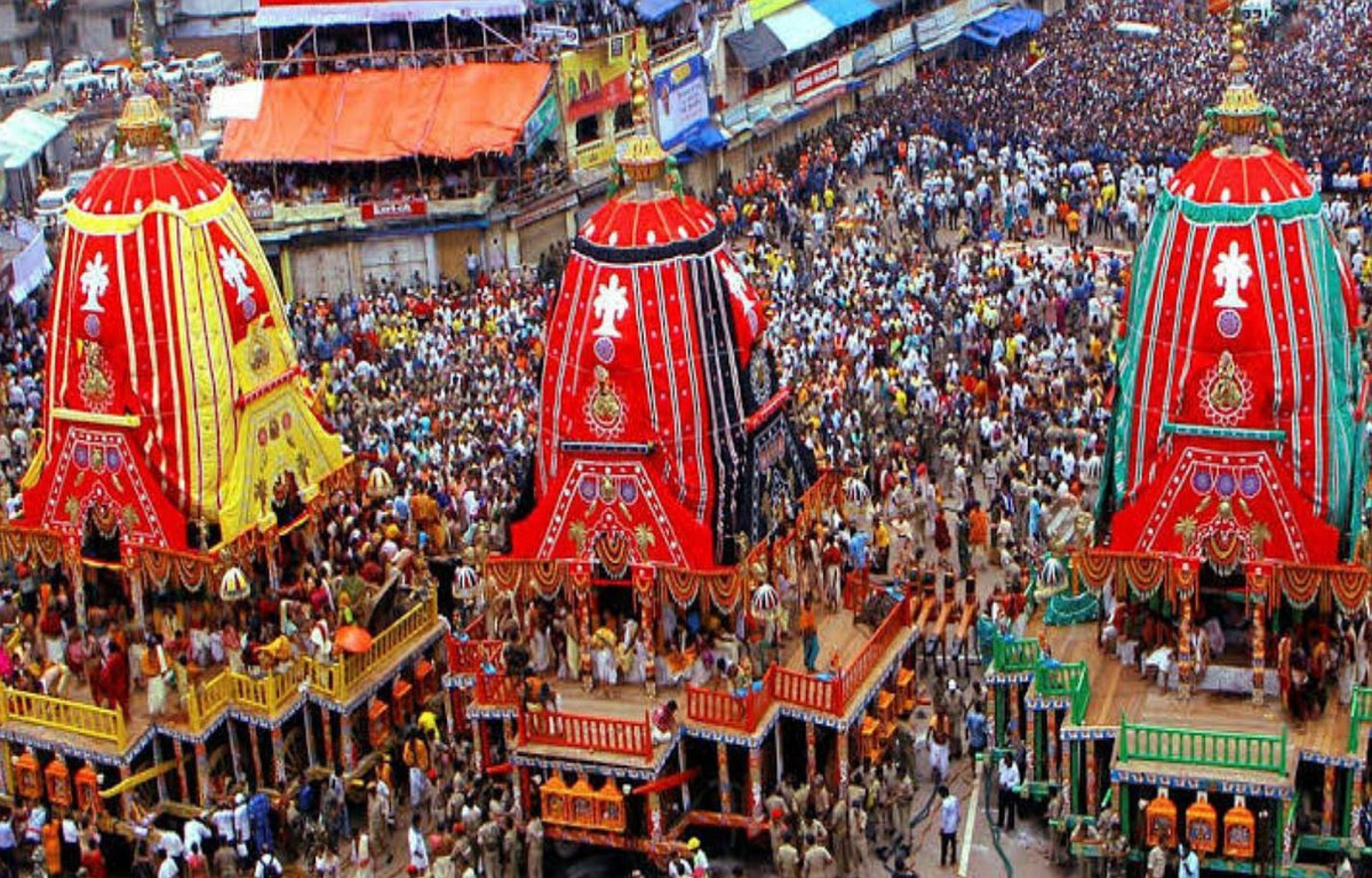
One of the most awe-inspiring aspects of Ratha Yatra is the grand procession of the three colossal chariots. Each deity has a specially crafted wooden chariot, built anew every year by expert artisans from the carpenter community of Odisha.
- Nandighosa: The chariot of Lord Jagannath, standing 45 feet high with 16 wheels.
- Taladhwaja: The chariot of Lord Balabhadra, 44 feet high with 14 wheels.
- Darpadalana (or Padmadhwaja): The chariot of Devi Subhadra, 43 feet high with 12 wheels.
The chariots are pulled by thousands of devotees with thick ropes, a ritual that symbolizes unity, devotion, and spiritual progress.
Rituals and Festivities

The Ratha Yatra spans over 9 to 12 days, starting with the grand procession called Pahandi Bije, where the deities are brought out of the temple amidst drumbeats, chants, and conch shells. Another major ritual is Chhera Pahanra, where the Gajapati King of Puri sweeps the chariot floor with a golden broom—a gesture of humility and equality before the divine.
After reaching the Gundicha Temple, the deities stay for seven days, after which they return to the main temple in a return journey known as Bahuda Yatra. On the return, the deities stop at the Mausi Maa Temple, where Lord Jagannath is offered his favorite dish, Poda Pitha, a traditional baked sweet.
Cultural and Global Impact

Ratha Yatra is not just a religious event but also a cultural celebration. Puri becomes a canvas of color, music, and tradition during the festival. Classical dance performances, folk music, and local arts flourish during this period.
Interestingly, the Ratha Yatra is now celebrated in various parts of the world, including the United States, UK, Russia, and Australia, largely popularized by the International Society for Krishna Consciousness (ISKCON). These global celebrations help spread the message of love, peace, and devotion.
Conclusion
Ratha Yatra is more than just a chariot festival—it is a celebration of faith, equality, and divine grace. It brings together millions in a unique display of devotion and tradition, making it one of the most significant and soul-stirring festivals of India. Whether you are a spiritual seeker or a cultural enthusiast, witnessing the Ratha Yatra is a once-in-a-lifetime experience that leaves an indelible impression on the heart and soul.